Compiler 2.0: Building the Next Generation Compilers with Machine Learning
The genius of FORTRAN, introduced in 1957, was not just that it was the first high-level language, but that it made hardware disappear. The same FORTRAN program could run on an IBM System/360, a DEC PDP-8, a CDC 6600, or even a Cray-1 with enough performance that most programmers never had to touch assembly or write architecture-specific code.
Over time, as hardware and software grew more complex, compilers quietly lost the ability to maintain this abstraction. Multicores, complex vector instructions, and specialized accelerators have all pushed more of the performance burden back onto the programmer. Today we have, in many ways, come a full circle. For example, getting peak performance from NVIDIA’s V100, A100, H100, and B100 families often requires different, architecture-specific CUDA kernels and, on the latest parts, even hand-written PTX assembly to fully exploit tensor cores and the Tensor Memory Accelerator. To the best of our knowledge, the Apple/Arm SME accelerator does not even have a high-level compiler, and most high-performance code must be written using intrinsics or assembly.
This raises a fundamental question: can the next generation of compilers restore the original promise of the high-level programming languages—hiding architectural complexity while still delivering near-peak performance?
In this talk, I will argue that the answer is yes, and I will outline a path forward for us to modernize compilers—both to make them far more effective on today’s architectures and to radically simplify how we build them—by creating proper abstractions and leveraging machine learning and other modern techniques.
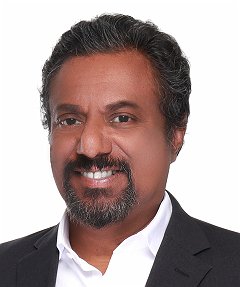
Saman Amarasinghe is the Thomas and Gerd Perkins Professor in the Department of Electrical Engineering and Computer Science at MIT and leads the Commit compiler research group in MIT’s Computer Science & Artificial Intelligence Laboratory (CSAIL). Born in Sri Lanka and schooled at Royal College, Colombo, he is a graduate of Cornell University and earned his Master’s and PhD degrees from Stanford University. He was elected as an ACM Fellow in 2019.
Mon 2 FebDisplayed time zone: Hobart change
08:45 - 09:45 | 2025 ACM/IEEE-CS Ken Kennedy AwardPlenary Keynotes at Pyrmont Chair(s): Steve Blackburn Google and Australian National University | ||
08:45 60mKeynote | Compiler 2.0: Building the Next Generation Compilers with Machine Learning Plenary Keynotes Saman Amarasinghe Massachusetts Institute of Technology | ||